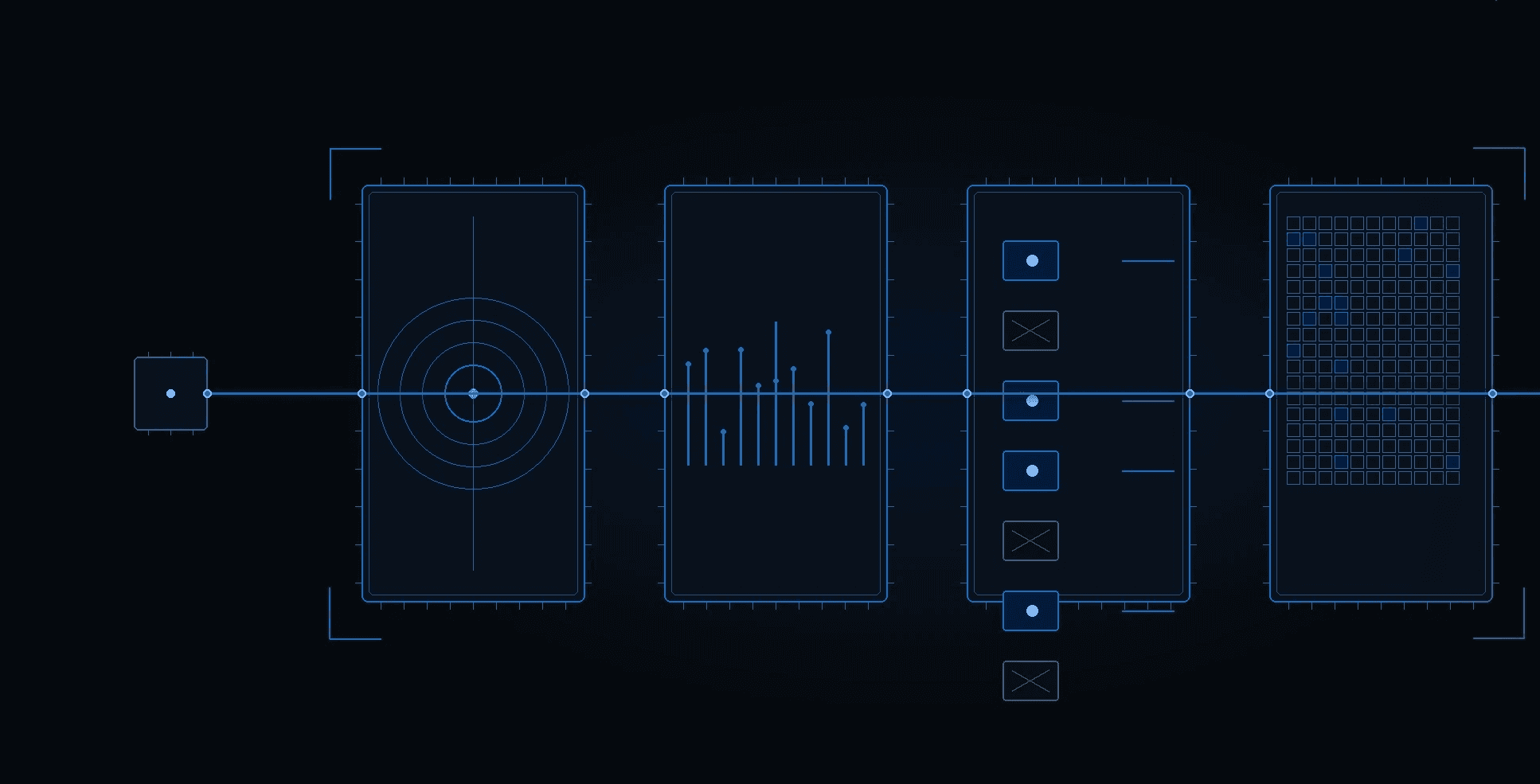
Most teams think the hard part of synthetic data is generation. It's not. It's everything around it.
One mistake I keep seeing in synthetic data is treating the whole problem as “generation.” It isn’t.
There are at least four separate problems:
1. Domain fit
A generic generative model is not your sensor.
“Generate a fisheye view from a vehicle” is not enough. Real systems care about exact resolution, distortion, optics, noise, compression, viewpoint, and other sensor-specific characteristics. Domain adaptation is not optional.
2. Controllability
Can the model actually produce what you asked for?
Object count, placement, scale, occlusion, background consistency, prompt adherence, hallucinations, artifacts. This is an engineering problem, not a prompting trick.
3. QA
Even good generation needs automated filtering.
Some outputs should go to training, some should be rejected, and some should feed back into improving the system.
4. Scalability
A notebook that generates a few examples is not a synthetic data pipeline.
Real systems need orchestration, reproducibility, monitoring, throughput, and infrastructure that can run reliably beyond a one-off demo.
Too many teams jump from “the notebook runs” to “we have a synthetic data pipeline.”
That gap is the whole product.
At DiffuseDrive, we think about synthetic data as an engineered system: domain-adapted generation, controllability, automated QA, and scalable infrastructure.
If you skip any of these, you do not have a scalable data engine.
You have a demo.
Our Works
MORE Articles
A curated selection of deep dives, case studies, and practical knowledge to help you understand, adopt, and scale AI the right way.

